
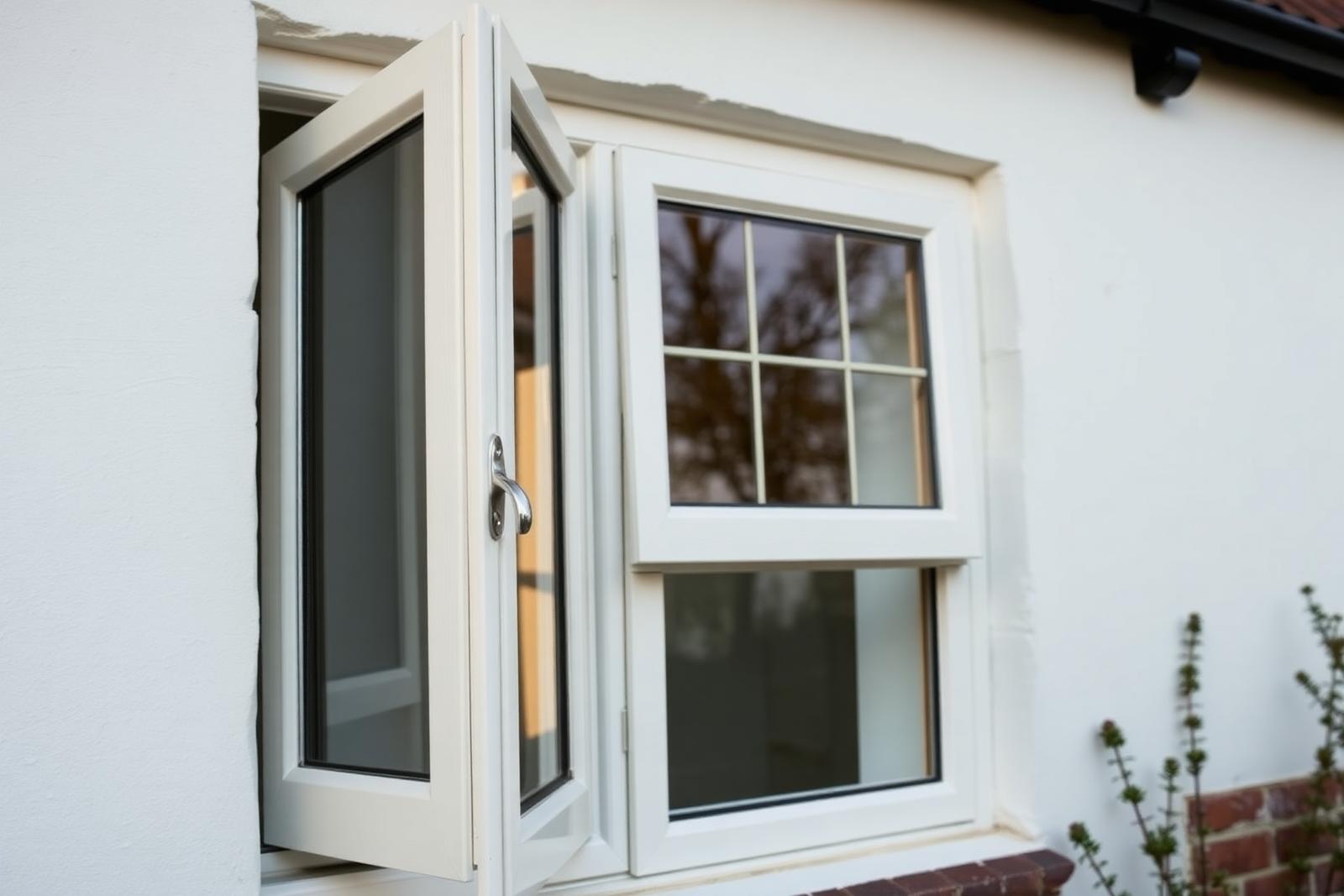
A standard casement sits proud of its frame: the opening sash stands a little forward, casting a shadow line around each opening. A flush casement sits level with the frame, the way a timber window has always sat. On a modern estate house either reads perfectly well. On anything built before about 1930, the flush version is the one that disappears into the elevation.
The trade-off is cost and, marginally, hardware choice. Flush systems carry a premium of roughly ten to fifteen per cent over an equivalent standard casement, and the range of handles designed to suit them is narrower - though monkey-tail and pear-drop furniture in pewter or antique black covers most period work.
Where we tend to steer people: flush for cottages, flint and brick frontages, Victorian and Edwardian terraces, and anything in a conservation area. Standard casement for interwar and post-war semis, where the original windows were proud anyway and the shadow line is part of the look.
Both are available in the same glazing specifications, so the thermal performance conversation is separate from the aesthetic one. You do not sacrifice a U-value to get the right sightline.